

Being Bearish Doesn’t Make Mathematical Sense
Bitcoin has been profitable nearly 92% of its lifetime, and no four-year period has ever lost—making persistent bearishness statistically weak.

The word “contrarian” has been co-opted. What used to mean doing the opposite of the crowd has somehow become synonymous with being bearish, as if pessimism is inherently the sophisticated, independent view. It isn’t. And the data makes that case far more clearly than any opinion piece could.
This week at a glance:
Shorting Bitcoin from the recent peak to the local lows returned around 52%. Longing from the lows back to the all-time high returned over 109%, more than double, with no leverage.
Bitcoin’s 2-year rolling returns have just turned negative for only the fourth time in its entire history; each prior instance was a generational accumulation opportunity.
The Consumer Sentiment Index illustrates how significant troughs in sentiment often precede periods of sustained gains for the S&P 500.
Bitcoin has been profitable to hold for almost 92% of its existence; on a four-year rolling basis, there has never been a losing period.
Asymmetry
From the recent all-time high to the local lows, shorting Bitcoin would have returned around 52%. Longing from those same lows back to the all-time high returned nearly 110%, over double, from the same price points, without leverage. For a short position to match that upside, Bitcoin would need to fall from its all-time high to somewhere around negative $12,000. That’s not a bear case. That’s an asset ceasing to exist.
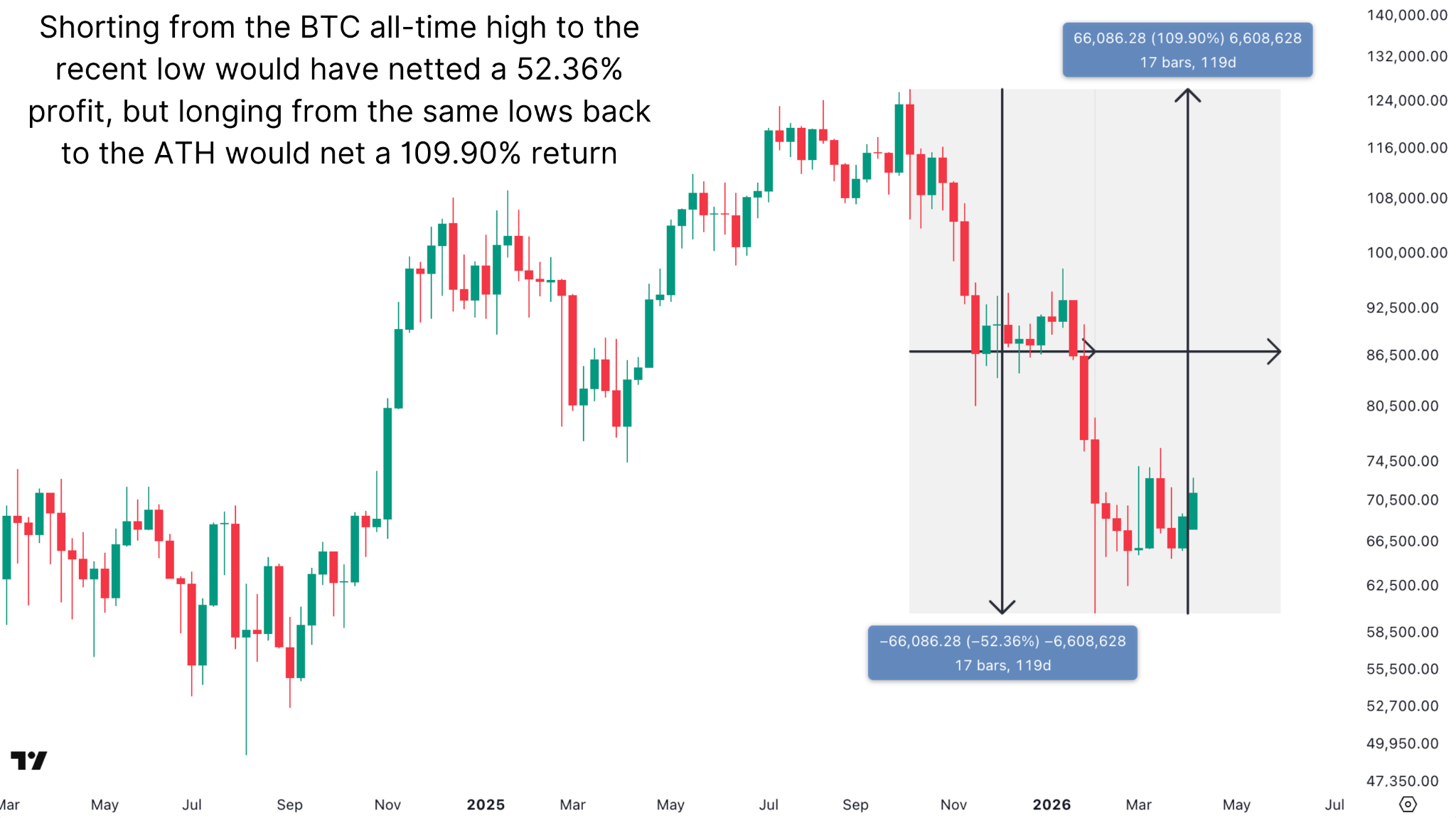
Figure 1: The rewards of shorting from the all-time high versus longing back to the same level.
The asymmetry compounds through the loss recovery math. A 50% drawdown in your portfolio requires a 100% gain just to break even. A 70% drawdown requires 233%. When you short an asset with a decade-long upward trajectory, every funding rate, every tax event, and every execution cost erodes whatever edge you think you have, and the math required near-perfect timing before any of that even starts working in your favor.
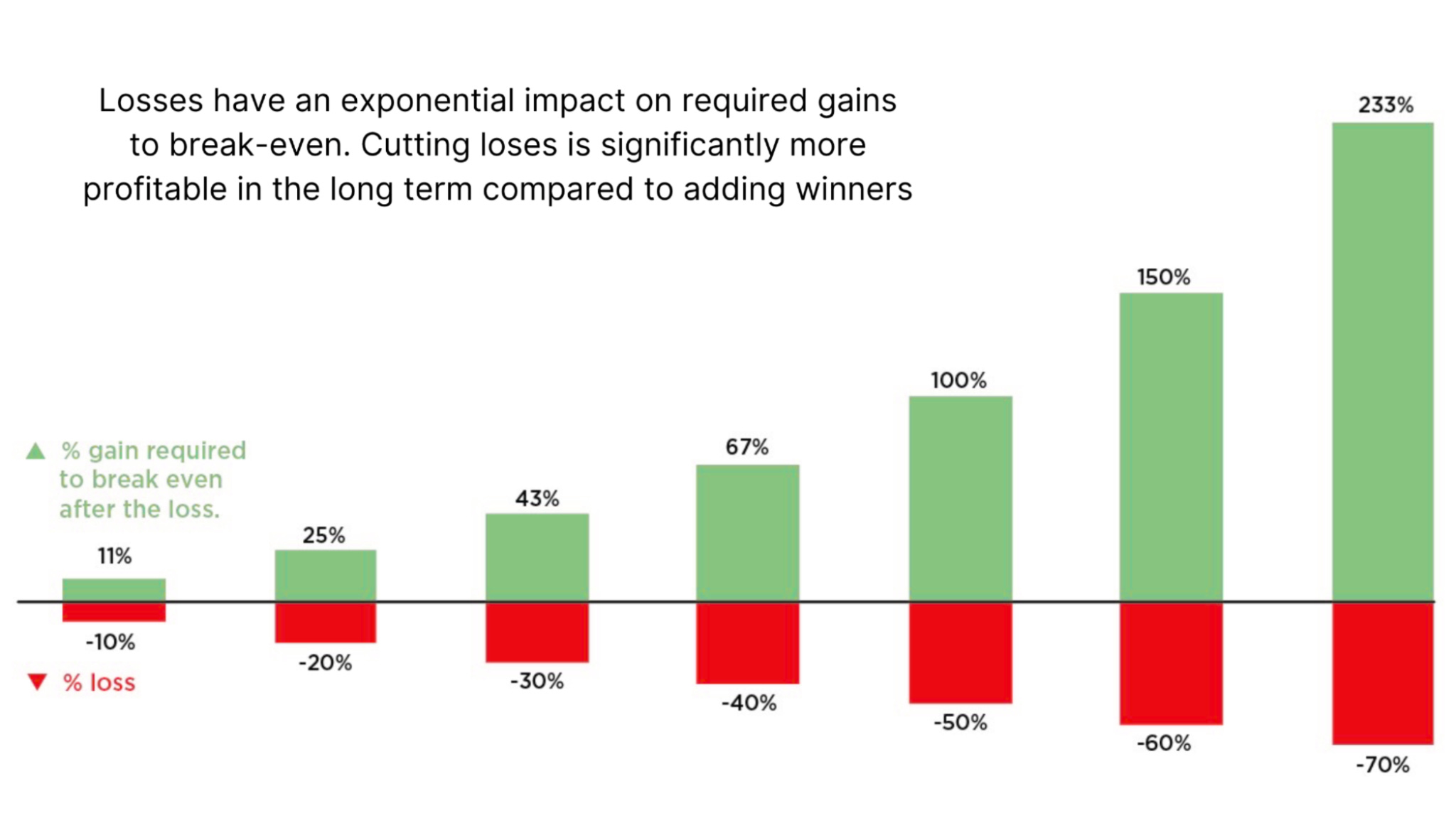
Figure 2: The exponential relationship between losses and the gains required to break even.

A Rare Historical Signal
Bitcoin’s 2-year rolling returns have just turned negative for only the fourth time in its entire history. The prior three instances: November 2022, almost to the day, when Bitcoin was approaching its cycle low; late 2019, when price was around $8,000; and 2015, when it was around $300. In every case, what followed was one of the more significant recovery periods Bitcoin has produced.
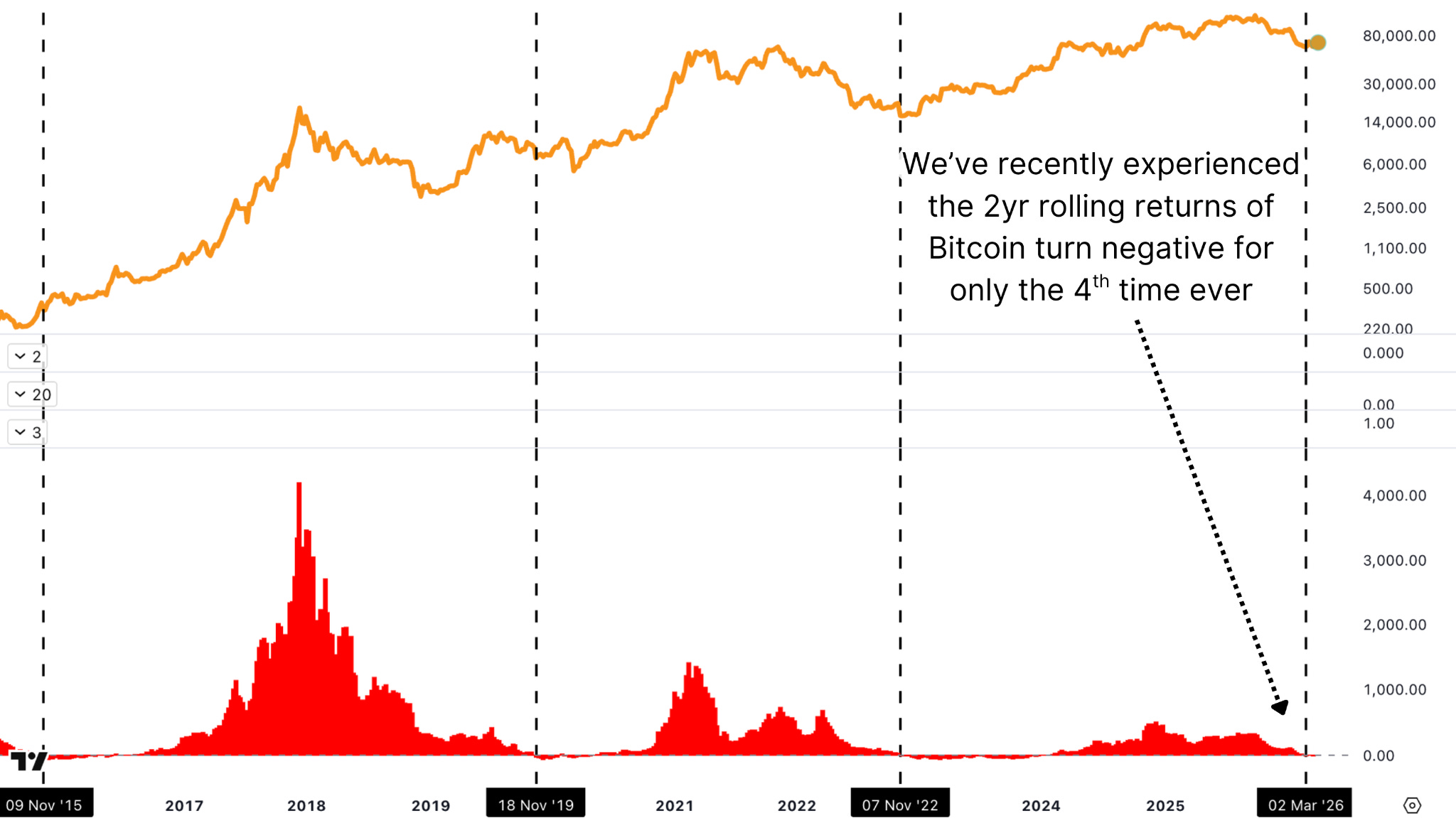
Figure 3: Bitcoin’s 2-year rolling returns have recently slipped below zero.
This isn’t a coincidence. It’s a function of how deeply the market has already discounted future expectations. When two years of returns have been wiped out, the sellers who were going to sell have largely already sold. What tends to follow is accumulation, not further capitulation.
Psychology Behind The Bearishness
Pessimism sounds more considered than optimism. It signals awareness of risk, independent thinking, and depth. But the actual track record of sustained bearish positioning in a structurally upward-trending asset is consistently poor, and the data on fundamental news events reinforces this: positive Bitcoin headlines led to price increases just 53% of the time in the following 10 days, barely above the 56% average for any random day. News, in either direction, adds essentially no predictive edge.
Figure 4: The historical relationship between the Consumer Sentiment Index and S&P 500 returns.
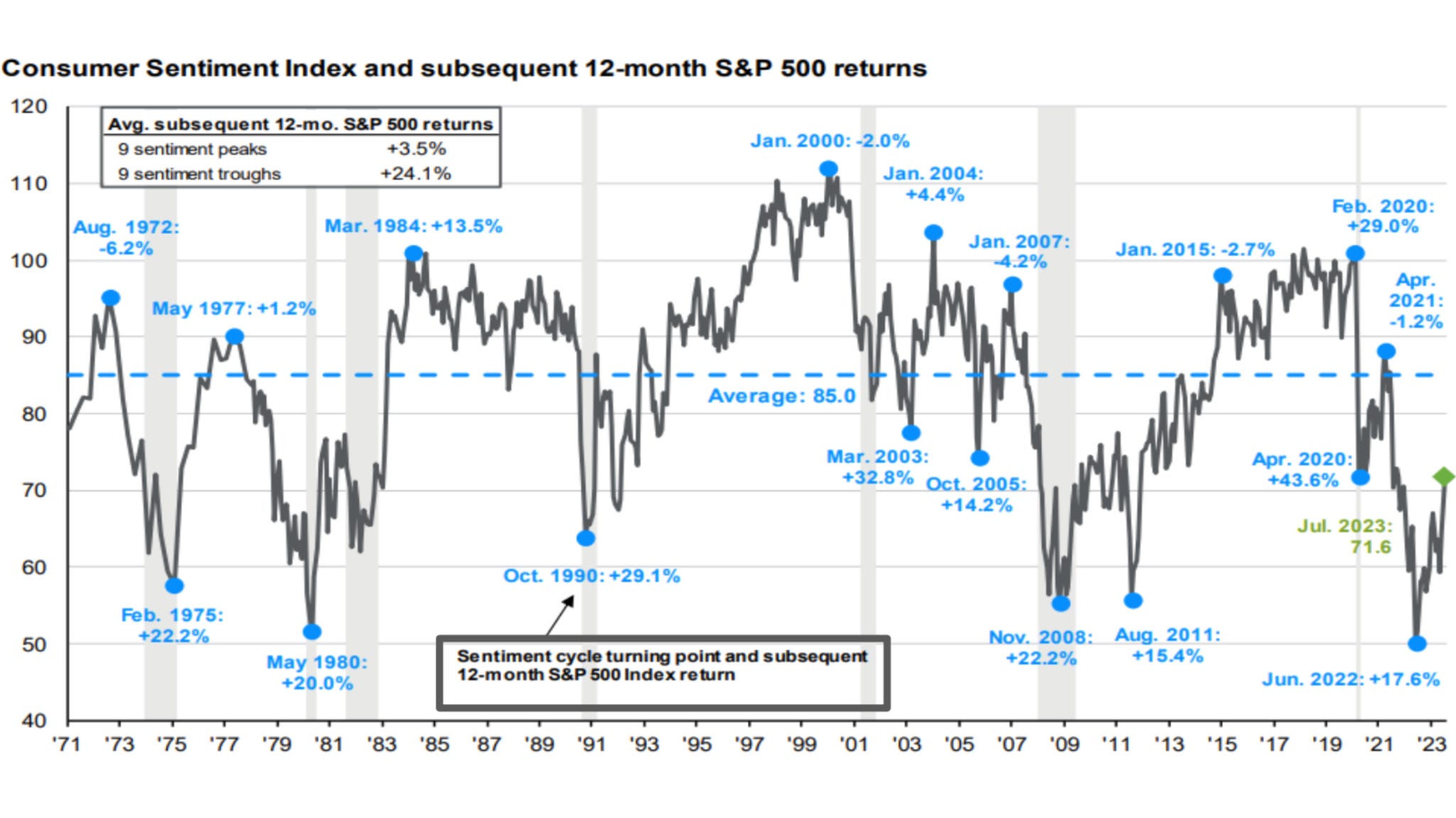
The Consumer Sentiment Index tells a similar story from a macro perspective. At the nine sentiment troughs measured since the early 1970s, the average subsequent 12-month S&P 500 return was 24.1%. At the nine sentiment peaks, it was 3.5%. Right now, sentiment is sitting at levels comparable to February 1975 and late 2022, both of which preceded significant recoveries across risk assets.
Long-Term Data
Analyzing Bitcoin Profitable Days, Bitcoin has been profitable to hold on 91.9% of all days in its history, 5,248 out of 5,712 total days. More importantly, at no point in Bitcoin’s entire existence would a four-year holding period have produced a net loss. Every entry point, across every cycle, including the 2017 and 2021 peaks, has resolved positively on a four-year horizon.
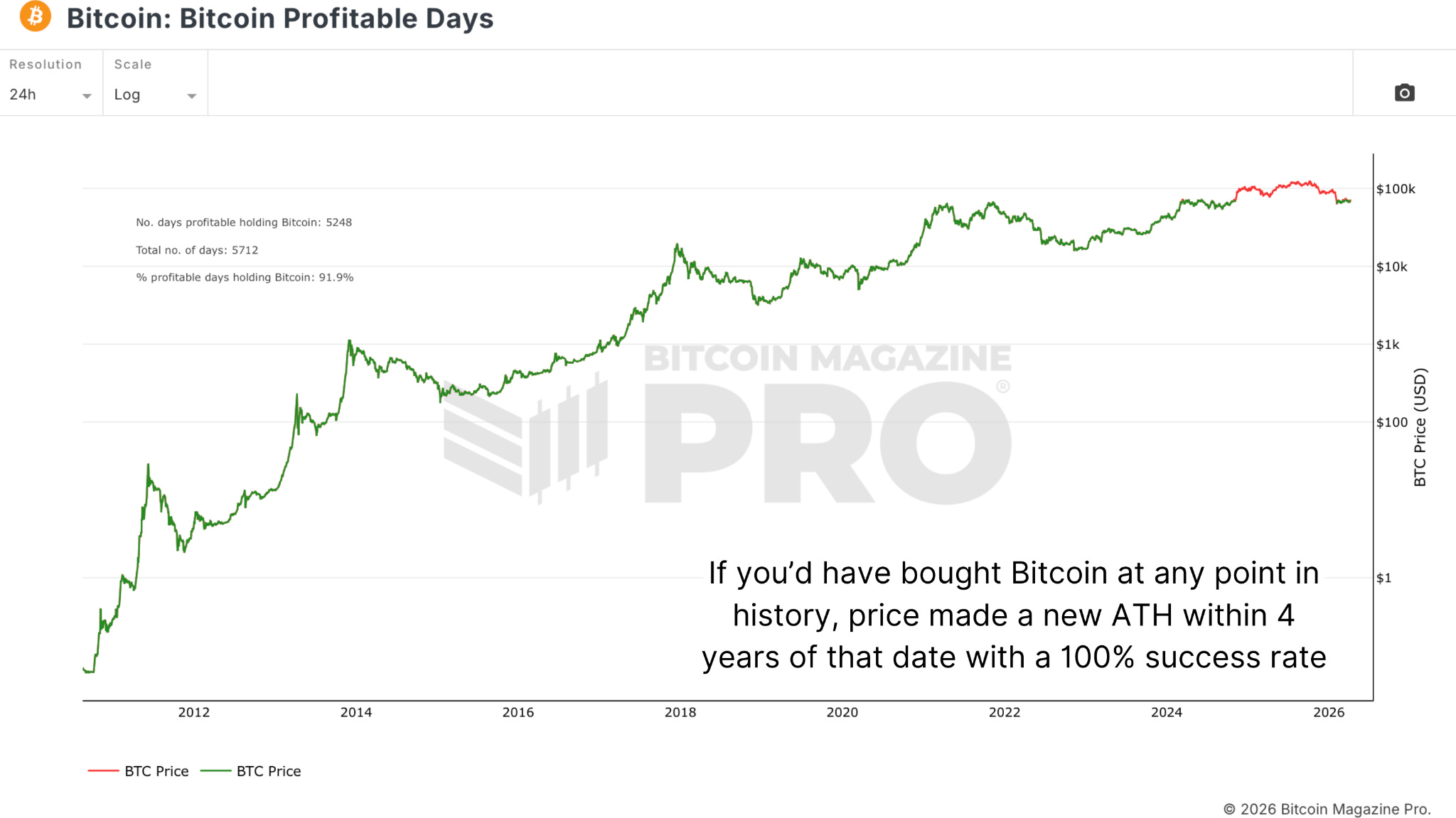
Figure 5: Bitcoin Profitable Days indicates that it has been profitable to hold on almost 92% of all days throughout its history.
Being bearish at a 50% drawdown, when 2-year rolling returns have just turned negative, when consumer sentiment is at multi-decade lows, and when the long-term holder data points toward exhausted selling pressure, that isn’t a contrarian view. It’s following the crowd into a position that the math consistently penalizes. The contrarian position, by definition, is the one fewer people are taking. Right now, that’s accumulation.
Closing Thoughts
Rely on the data, not the sentiment. Bitcoin is at a discount. Historically, those discounts haven’t lasted long. And every time the crowd has been this bearish, the investors who acted on the data rather than the noise have been the ones who came out ahead.
For a more in-depth look into this topic, watch our most recent YouTube video here: The 78.8% Bitcoin Bet I’m Taking Against The Crowd
Matt Crosby
Director of Research & Analytics
Bitcoin Magazine Pro

For more detailed Bitcoin analysis and to access advanced features like live charts, personalized indicator alerts, and in-depth industry reports, check out Bitcoin Magazine Pro.
Make Smarter Decisions About Bitcoin. Join millions of investors who get clarity about Bitcoin using data analytics you can’t get anywhere else.
We don’t just provide data for data’s sake, we provide the metrics and tools that really matter. So you get to supercharge your insights, not your workload.
Take the next step in your Bitcoin investing journey:
Follow us on X for the latest chart updates and analysis.
Subscribe to our YouTube channel for regular video updates and expert insights.
Follow our LinkedIn page for comprehensive Bitcoin data, analysis, and insights.
Explore Bitcoin Magazine Pro to access powerful tools and analytics that can help you stay ahead of the curve.
Invest wisely, stay informed, and let data drive your decisions. Thank you for reading, and here’s to your future success in the Bitcoin market!
Disclaimer: This newsletter is for informational purposes only and should not be considered financial advice. Always do your own research before making any investment decisions.
The 92% profitability stat is compelling and worth repeating, but the framing needs a small caveat: that figure is backward-looking, and the earlier years of Bitcoin's history carry enormous weight in the calculation given how extreme the returns were. The more relevant question for someone buying today is whether the next 4-year window holds. The historical answer is yes, no four-year holding period has been negative. But survivorship and adoption dynamics are different now. Bitcoin's market cap is larger, institutional ownership is growing, and the marginal buyer is different from 2013 or 2017. The bull case still holds, but the confidence intervals on future performance are legitimately wider than the historical stat implies. It is a strong probabilistic argument, not a guarantee.